
The Question of the Mind
to know or not to know

I sat in the driver’s seat of my little Lexus, perched precariously on a tiny sliver of fate. If my future tilted one way, I would be fine. If it angled another, I could be paralyzed or even die.
Just a few minutes earlier, standing at the front desk of my hair salon, I began to feel weak. Low blood sugar? Dehydrated? Must be, I mused.
Carefully, I made my way to a nearby coffee shop, where I ordered a croissant and water. I downed them quickly as I needed to be on my way. But walking across the common to the car, I realized that neither the water nor the carbs had allowed me to make a total recovery.
Maybe I just needed a little more time.
I leaned the car seat back and closed my eyes. Nothing got better. My left arm seemed slightly heavy, but not numb.
Just rest a moment, I reasoned to myself.
With eyes closed, I sensed there was a left and a right turn in front of me. The turn on the right fork was a beautiful S shape, bordered on both sides with a white mist. On the left was a 45-degree turn that was slightly shadowed, but familiar and straight. And for no rational reason, I wanted to go left.
Not feeling well, but conscious and awake, I absorbed the critical nature of my circumstance. If nothing changed for the worse, I would likely feel better eventually, and be on my way, but if I felt myself swerving a little more to the right, I sensed I might be in deep trouble because I would not be able to call. From where that right and left image originated, I have not a clue. It was actually more in retrospect that I realized the vision existed.
Not getting better, I called my husband, B., who was on his way to a workout session.
Much later, he told me that my voice had trailed off at the end of my call. He readily tagged the circumstances as urgent and called 911 while he rushed to meet the emergency vehicles.
With blood pressure of 179, low blood sugar, and a racing heart, I was whisked away to the nearest hospital. B., my neurosurgeon husband, followed the ambulance and arrived at the hospital prepared and ready to tell them exactly the tests he wanted them to run.
A day later I left the hospital having had numerous blood tests, IV fluids and MRI’s.
There was no definitive conclusion as to what had happened to me. I had none of the familiar and feared maladies, for which I was mightily grateful: no stroke or heart attack. I was dehydrated but not critically ill.
I was referred to a neuroradiologist for a further analysis of my MRI.
I did not want to go to the neuroradiologist. I’d been worried lately about my memory. I’d see the face of a movie star or celebrity, know who they were, but be unable to recall their name. I’d taken to tensing up every time I saw a famous face or a longtime acquaintance whom I had not seen for years.
I am certain that much of my anxiety stemmed from the long and painful demise of my mother, who suffered from progressively severe dementia in her later life. Not living in the sophisticated world of today’s medicine, her doctors never diagnosed her decline specifically, so I remained anxious about Alzheimer’s, even though my genetic tests rendered none of the markers. When my sister was alive, she reminded me often of my mother’s head injuries: a childhood fall from a horse, a car accident, and finally a treacherous fall on the ice.
I grew weary of my anxiety. Anxiousness is heavy. If I missed a telephone appointment, I was certain I was destined for the land of the lost mind. If I had to have someone call my phone because I had forgotten where I laid it, it was the same.
I have lived my life as the transparency advocate, establishing with friends, family and business associates that we cannot fix the problems we do not see. Bring them forward, examine them, I encouraged. If not, they can rot the infrastructure from below, and eventually become the source of tremendous problems, sometimes causing a total collapse.
So it was with great interest that I viewed myself from the outside in and realized that my reluctance to see the neuroradiologist was not in character for me.
I concluded that I was circling around definitive discovery because I was petrified that the truth would expose and confirm my greatest fear, with no cure or remedy. I had no desire to take even a peek at the dark future that could be my destiny.
To not want to know was a phenomenon I’d never experienced.
B. reassured me that I was fine. Despite his lifelong and venerable medical career, I did not believe him. I thought he was patronizing me because of his extreme kindness.
However, his extreme kindness turned into stubborn tenacity when I told him I did not plan to go to the appointment.
“We are going, and I am going in with you. I want to see your scan.”
Think about that. I considered my brain as the most intimate organ of my body. No one I personally knew had ever seen my brain. Now imagine being married to someone who can decipher everything that’s going on in there. It was an intimidating experience to anticipate.
The scheduled morning arrived. I sat on the edge of the bed, dreading the upcoming appointment.
B. with me, we entered the small sterile cubicle of a Johns Hopkins-trained specialist. He hailed originally from the country of Colombia.
Before I could even seat myself, he motioned to the picture of my brain that was featured on the large, high-resolution screen, angled off to the right on his desk.
Exuberant and effusive, he started speaking, as though describing one of his favorite people or pastimes.
“You have an amazing brain, maybe 30 years younger than your chronological age. It’s amazing that you have little-to-no atrophy. “
I searched B.’s face to see if he concurred.
“I told you over and over that you have a beautiful mind,” he said.
Beautiful mind and healthy brain are two very different concepts, I reasoned silently to myself.
It was then that Imposter Syndrome herself joined me in the small workspace. Now there were two of us to face off against the two scientists. Imposter syndrome typically refers to one’s lack of ability to believe they deserve the success they have achieved as a result of their own efforts or skills. In that room, I simply couldn’t believe my brain deserved the praise these two doctors were spewing.
So even though I said my hallelujahs to two highly educated intellects and gave a final high-five farewell to the neuroradiologist, I still had trouble believing their compliments were warranted. It felt as though the little Imposter Syndrome exited the office right along with me, chattering her silent rebuttals as we made our way to the car.
The weeks passed and B. continued to reinforce my healthy brain diagnosis. Somewhere in the passage of time I began to notice a difference. I no longer tensed up when I saw a celebrity face, and with no-to-little kerfuffle I could usually pull up and call out their name. Book and movie names flowed off my tongue. Gradually my little imposter friend slipped off into the shadows and I began my days with a new kind of confidence. It became apparent that most of my memory lapses had been caused by the stress of my illusory deficit.
During Covid, Nikki Erlick wrote The Measure, a novel about the length of our lives. As the story begins, every human being on earth receives, overnight on their front doorstep, a box with a single string inside. The length of the enclosed thread corresponds perfectly to the length of the recipient’s remaining life. The novel weaves multiple stories about how the characters deal with the arrival of their package, and the life they choose to live when they receive the news.
We were fortunate enough to hear Nikki speak at the Society of the Four Arts in Palm Beach. There she told us that she had asked audience members from other lectures to raise their hands if they would open such a package should it arrive at their own front door. She went on to say that only about 50% of the attendees raised their hands. In other words, half the people would choose to know the exact date of their death if they had access to it.
Walking the transparency talk is an easier hike if we think the prize is early knowledge that brings us healing or salvation.
Walking the transparency talk is an easier hike if we think the prize is early knowledge that brings us healing or salvation.
Unfortunately, the fear of dementia or specifically Alzheimer’s dementia is a bit like Nikki Erlick’s premise with a slight twist. With a positive diagnosis of either, it is most likely that you will fall off the mental cliff and not be able to remember your past or your loved ones’ faces, but no one can tell you exactly when that will happen.
When I tell my story about the day I stood at the fork of the two roads, I am often interrupted by anxious friends who have shared my same fear. They showed up for the lecture on Wednesday and the talk was on Tuesday, or they left a bag in the airline club, and never registered it missing until their name was paged to come to the front desk to retrieve it.
It is interesting to note that individuals who have the least worry about their memory are often the ones who are in trouble. It is their spouse, family or friends who bring the concern to the doctor. I learned that little tidbit in the cubicle with my husband, my doctor, and my little imposter friend.
I also learned, over dinner with friends who shared a concern similar to mine, that there are now places where one can order and obtain their own diagnostic MRI for a reasonable cost.
It is also worth noting that if my Harvard-trained neurosurgeon husband had not walked through the emergency room door and demanded that I have an MRI, and not a less sensitive CAT scan, it might not have been ordered due to the red tape of hospital and insurance bureaucracy.
My mother’s end-of-life decline had stitched me into a strait jacket so tight that I didn’t even know to search for the release buckles. When someone offered to loosen them or even remove the coat entirely, I had politely declined the offer.
I preferred to stay buttoned-up and scared. Maybe it was because the space felt familiar and safe. As long as I didn’t know, I didn’t have anything wrong.
But I am ever so grateful to have been pushed to learn the truth.
And if the MRI had delivered to me a different message, I may have assessed the length of my remaining life string in a different way. I can only speculate as to what would have changed. Maybe I would have asked B. to downsize our home and maybe, I would have finally been able to give up our apartment in New York City. I imagine I would make every attempt to take a scalpel to the superfluous activities that populate everyday life. But I can only speculate as to what then would appear redundant or useless with that mindset.
But mostly, I think, I would have taken off on a human tour. No Zoom calls. I think I would want to feel the in-person vibes of my beloveds. I’d want to sit across from them in their upholstered chairs, where their lives were most easy, and watch for the tiny nuances that made them most unique. I’d listen for the charm of the ones who dropped the G’s on good mornin’ and take note of the color of everyone’s eyes. I’d exercise my brain like my biceps, see their face, close my eyes, open my eyes and see their face again. I’d take a close up shot of the crooked smile, the freckled nose, or the childhood scar underneath the left eye, all with the intent of recalling the little thing that made them most themselves. And all the while I’d mind chatter to myself and pray that I could pull up the picture and remember how love feels, even if the names and connections were lost forever in some future fog.
Because the brain scan rendered positive news, it does not mean my life string is longer, or that other neurological complications could not surface down the road, but it does mean the feel of the thread in my fingers is smoother.
When Nikki had asked for a show of hands to indicate whether we would open the box left on our doorstep, it was a year before my episode. B. and I raised our hands simultaneously, without glancing at the other or taking even a moment to ponder.
I had been asked that question before, and I had always affirmed that I would want to know. I never understood the downside of the wisdom.
My apprehension in visiting the neuroradiologist had a great deal more to do with my future quality of life. My greatest fear was living a long slow decline. The prospect of mental deterioration created sheer terror in me, far exceeding the fear of anything death itself could possibly deliver.
Death has always been considered the great equalizer. But I knew, through my mother, that the pathway has its own hierarchy.
Haven’t we all heard the praise and acclaim given to those who passed on with their mind intact?
I just talked to him yesterday; he was so sharp.
There’s a joy to that reverie that doesn’t exist for the lost mind of the living or recently deceased. For those passings we hear the downshift of tone, the whisper of regret that the decline had not been pretty.
Yes, it is sad that they are gone, but they’d struggled for some time with some sort of dementia. And the voice of the speaker trails off in a meandering blubber.
I suppose that’s why it took an ambulance parade, a team of emergency doctors, a talented specialist, and one determined husband to take a look at my brain and give me the hope that I, too, might have the prospect of living and dying with Diana Vreeland’s lively attitude:
“I shall die very young. How young? I don't know. Maybe seventy, maybe eighty, maybe ninety. But I shall be very young.”
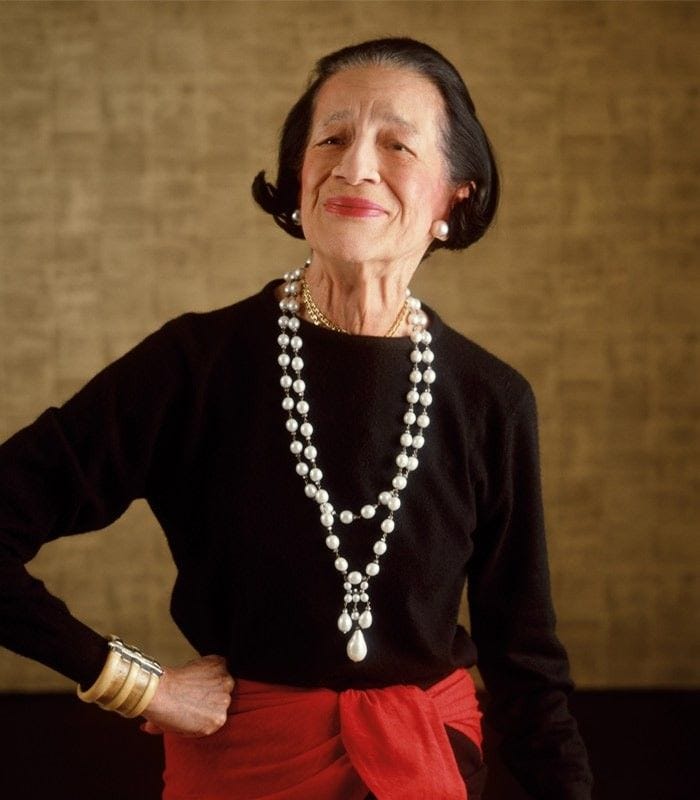
And in that rosy glow of youngness, I shall know which day of the week it happens to be and the news of the morning. And I will be in the exact middle of retelling a funny story to ALL the people I love in one exact place. And then, right then, I shall arrive at the end of my string.
All at once, and nothing first, —
Just as bubbles do when they burst.—Justice Oliver Wendell Holmes
YOU are so insightful I wrote about my experience so that people who have the same concern can be aware of some options. I also wanted to share the fear to "know."
I hope the "portable and easy" MRI becomes widely available even though it is only a diagnoses,not a cure.
What an uplifting story of transparency, bravery, and your willingness to face the future whatever it held. Thank you for sharing yourself, once again!